

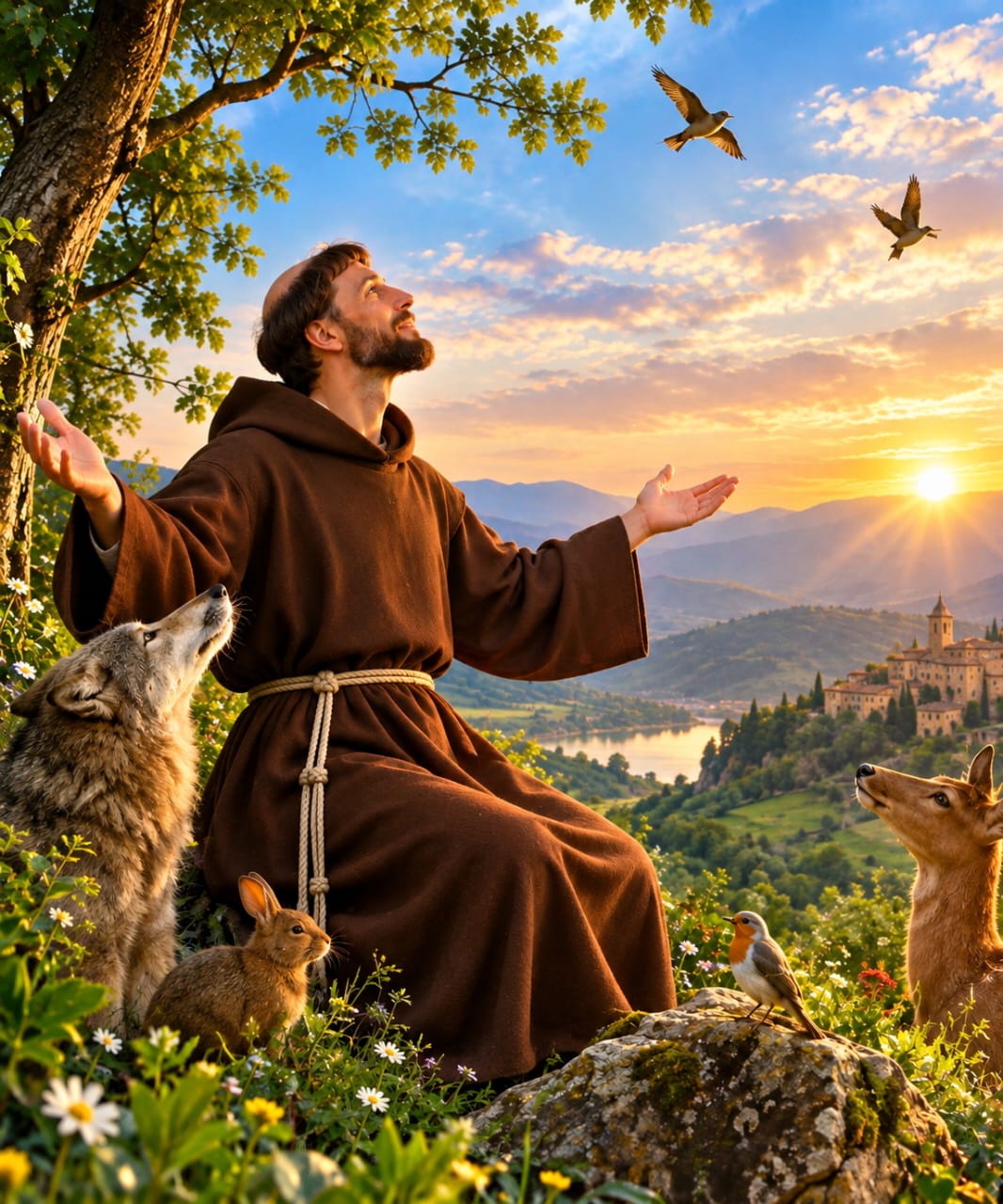
THE CANTICLE OF CREATURES: THE SONG OF ST FRANCIS OF ASSISI
JUBILEE YEAR OF SAINT FRANCIS OF ASSISI
Friar Johnpaul ONYIA, OFM CAP.
When we look around us, what do we really see?
We see the sun rising, the wind blowing, the rain falling, the trees growing, birds singing, and the earth producing its fruits. We see these things every day, yet perhaps we have become so familiar with them that we no longer see their beauty. We look, but we do not always see. We hear, but we do not always listen. It is at this point that St. Francis teaches us to look again, this time more deeply. For Francis, creation was not simply something beautiful to admire. It was a reflection of God’s goodness and a means of praising the Creator. The whole of creation became, for Francis, a song of praise to the One who created it. This is what we can say is at the heart of the Canticle of Creatures.
The canticle of creatures also known as the Canticle of the Sun, is one of the most beautiful prayers of St. Francis of Assisi. It expresses his profound love for God, creation, and all creatures. Written near the end of his life, when he was experiencing physical suffering and illness, the Canticle reveals that Francis had learned to see God’s presence and goodness even in the midst of suffering. It is not simply a poem about nature; it is a prayer of praise that invites every creature to give glory to God.
In the Canticle of Creatures, Francis begins by turning his heart to God: “Most High, all-powerful, all-good Lord.” Before he speaks about the sun, the moon, the stars, water, fire, or the earth, he first acknowledges God. This is important because creation is beautiful precisely because it comes from God. Francis does not worship creation; rather, he praises the Creator through His creatures. The sun, moon, water, fire, and earth are not gods in themselves. They are creatures that point beyond themselves to the goodness and wisdom of God. This distinction is essential to understanding Franciscan spirituality: love for creation ultimately leads to love and praise of the Creator.
When Francis calls creation his brother and sister, he recognizes that he is not the centre of creation. Rather, he belongs to someone greater than himself. He recognizes that he is part of God’s creation and that all creatures ultimately depend upon the Creator. Perhaps this is something we need to rediscover: we are creatures before we are anything else. Before our achievements, titles, intelligence, possessions, failures, or successes, we are creatures loved by God.
The Canticle also teaches us gratitude. Francis does not take creation for granted. He receives everything as a gift. And gratitude changes the way we live. When I recognize that something is a gift, I become less entitled. I become more grateful. I become more careful with what has been entrusted to me. Francis also praises God not only through beautiful and pleasant things, but also through forgiveness, suffering, and those who endure trials in peace. This is difficult to understand. Why would suffering become part of a song?
Francis knew suffering. He knew sickness, rejection, poverty, loneliness, and the pain of being misunderstood. Yet he discovered that suffering does not have to silence the soul. Even in suffering, the heart can still turn towards God. This speaks deeply to us, for there are moments when life does not make sense. We pray, but the answer seems delayed. We love, but sometimes we are hurt. We struggle, fall, begin again, and wonder whether God is still with us. Yet God is still present. Sometimes His presence is found not in the absence of suffering, but in the grace to remain faithful in the midst of it.
Francis eventually speaks of Sister Death. Even death becomes part of his song because he has learned to entrust everything to God. He understands that life is not ours to possess forever. Human life is a gift from God, and that, in the face of death, we are called to entrust ourselves to the Creator.
Therefore, the questions we should ask ourselves are: Do my words praise God? Do my actions praise Him? Does the way I treat people reveal His love? Does my vocation become a song of gratitude? Can I still praise Him when life becomes difficult?
May our lives become another verse in the great Canticle of Creatures: not a song centred on ourselves, but a song of praise that leads us, together with all creation, back to God.


Leave a Comment