

Lessons From a Brutal Reminder
Thought for the Week, August 23, 2026
The 2026 gubernatorial election in Osun State has come and gone, and a winner has been declared. But whether or not it can be asserted that the people have won is another question.
Irrespective of its outcome, the election has served as a brutal reminder of what Nigerians know already, and that is, the electoral process in Nigeria is untidy. The process and its outcome are driven by force and fraud.
In the build up to the Osun State gubernatorial election, Nigerians were treated to use of incendiary language, demonization of persons on the grounds of political differences, desperation of candidates and their sponsors, helplessness or lack of neutrality of critical institutions, violence leading to loss of lives. On Election Day itself, we witnessed vote buying. When all these are added together, what one has is a badly broken electoral process.
It is now up to us to learn some lessons in preparation for the 2027 general elections. In order to learn those lessons, we must interrogate ourselves and our politicians. Why the desperation?
The desperation is largely explained by the fact that the wealth of the land is in the hands of the state, and, to become a state functionary of state is to gain possession of Nigeria’s vast wealth. Politics has become the most lucrative venture in our land. That is why our elections resemble military warfare, a war someone once described as a do-or-die affair, or, as described on another occasion, a war in which all is fair.
And there are more questions to ask: who among the contestants in Osun State is innocent? If we cannot conduct a credible election in Osun, can we conduct one in the whole of Nigeria? Who are the people calling for the killing of others? Why have they not been arrested? Why are they not being prosecuted? Why is it that people commit electoral offences and get away with it? If anyone makes hate speech in Nigeria, if anyone professes and or promotes hatred towards members of a political party or a religious, ethnic or religious community, how should the law treat such a person? Why is it that every electoral season unleashes the murderous instinct in the worst among us and they get away with murder?
An election in Nigeria is like a game of football in which neither the centre referee, nor the assistant referees, nor the VAR, nor the pitch commands confidence. Such an election is a threat to stability and it impedes prosperity. In the absence of prosperity, people are impoverished and hungry. And that facilitates vote buying.
Fela Anikulapo Kuti sang, “I begi o, make you hear me very well, you can’t dash me my property.” And that says something to us about vote buying.
Someone who has stolen from the people comes to give the same people what he has stolen from them, to bribe them, so that they would cast their votes for him. He comes to “dash them their property”. The people would be right to recover their stolen money. But they must learn to vote according to their consciences.
Living in a country immensely blessed by God, Nigerians, especially politicians, must learn to work for a land in which everyone can flourish. Therefore, buy no vote, steal no vote, kill no one for the sake of an election.
Creating an atmosphere for free and fair election is not just the duty of the Independent National Electoral Commission. It is also the duty of the parties, security agencies, judicial officers and voters too. All have sinned, and all are sinning. All sides have been caught in the web of electoral violence and voter fraud. If we really desire to practice democracy, no party should be spared. This is the worst political class I have seen in the history of Nigeria. But instead of calling all of them to order, we canonize some and demonize others. Nigerians across ethnic and religious communities are willing to overlook the iniquities of politicians who are members of their ethnic or religious communities. That will not help us.
Nigeria is a land of extravagant religiosity. But we seem to practice a religion in which the politician is God. Despite wearing our religious identities, despite the fact that our politicians profess one faith or another, we live in a world and in a country where some would have us believe that politics is a pact of gangsters.
But the truly Christian politician is not one who goes from Church to Church, but one who must ask our Lord two questions every day. Waking up in the morning, every Christian politician, indeed everyone who professes the Christian faith must ask the question the rich young man asked Jesus in the Gospel: “What good deed must I do to possess eternal life?” And at night, going to bed, after all said and done during the day, every Christian politician, and everyone who professes the Christian faith must ask, “What more must I do?” This is the way of civility, the way of those who stand out of the crowd because they refuse to acquire power, wealth and pleasure through a pact of gangsters.
If the 2026 Osun State gubernatorial election is a brutal reminder of what we know already about our electoral process, we must learn some lessons in preparation for the 2027 general elections.
First, we need to give room to morality and sanction criminal behaviour in electoral matters. A criminal politician is a contradiction in terms. If he is a politician, he is not a criminal. If he is a criminal, he is not a politician. He is a brigand. Brigandage is not politics. The task ahead of us is to rescue politics from brigands. In this respect, while the political parties trade accusations, it has to be said that all of Nigeria’s political parties need to be called to order. It is a way of saying the accuser and the accused look like identical twins. If it is just to sanction one party, it would be unjust not to sanction the other.
We need to go back to the Uwais report and use it as template to reform our electoral process before the 2027 elections.
By way of a pro-people constitution and legislative agenda, we need to build Nigeria around a private sector driven economy. We need to recover the wealth of the land from the state.
We need to clean up our country. And we can.
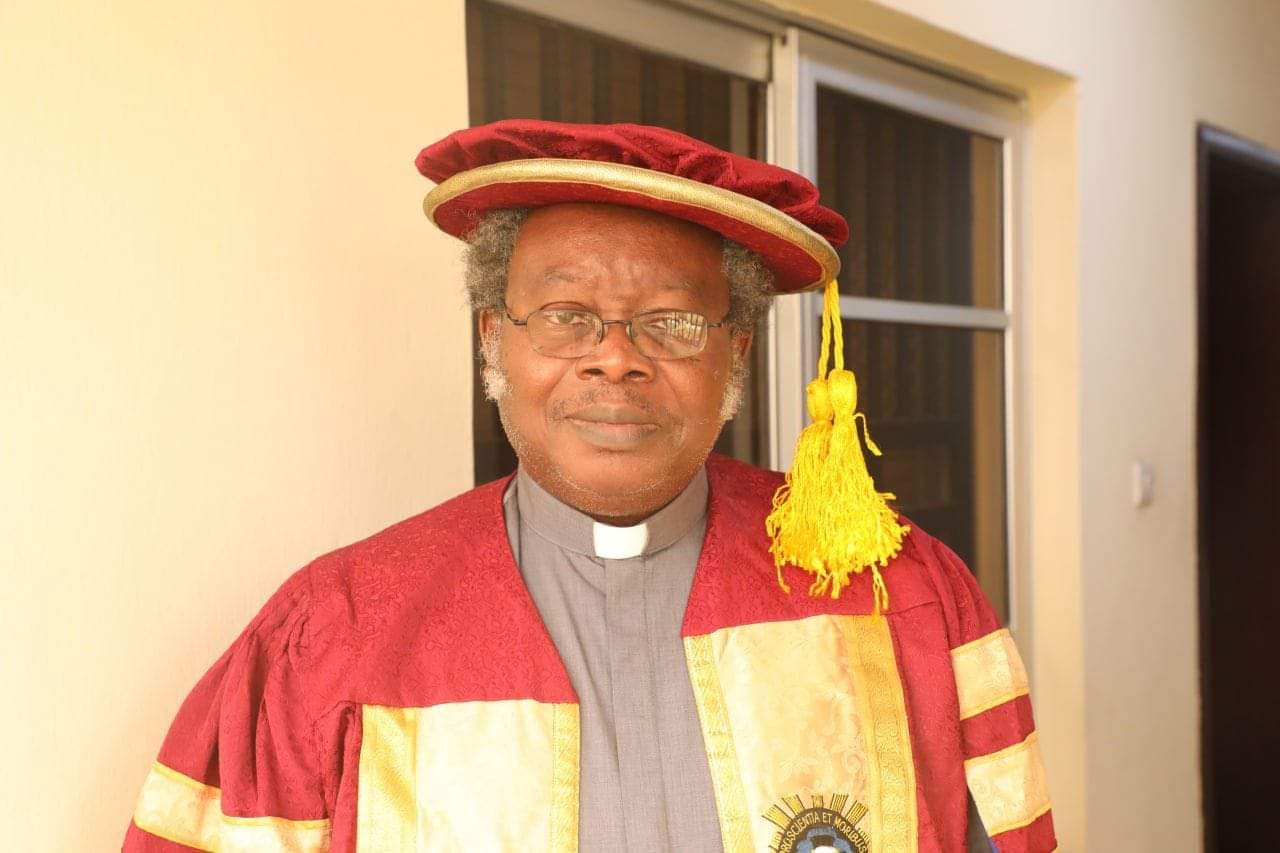
Father Anthony Akinwale, OP


Leave a Comment