

Ethnicity is not a Vice but a Virtue
Thought for the Week
May 24, 2026
A few years ago, some Master’s degree students of the Peace and Conflict Studies programme of the University of Ibadan came to interview me on the influence of ethnic consciousness on religious communities. I was highly impressed at their enthusiasm and level of intelligence. What a breath of fresh air! But I was also sad.
I was sad because I knew such fine intellects would most probably not end up in places where they will run the affairs of this country. Professor Olawale Albert and his team have put in place a programme that can help to transform Nigeria. The Peace and Conflict Studies Programme of the University of Ibadan can go a long way in bringing about a peaceful polity. But how much of the good work that programme and its participants do will filter down to effect meaningful changes in Nigeria, in a Nigeria where being the most qualified applicant for a job actually disqualifies you from getting the job?
For so long, so many problems have been blamed on ethnicity or ethnic consciousness in this country. But I must have shocked those students by my submission that neither ethnicity nor ethnic consciousness is the problem. In fact, I continued, ethnicity is not a vice but a virtue. The French loves France, the Italian loves Italy, the Belgian loves Belgium. They call that patriotism. It is a patriotic thing to love Yorubaland if you are Yoruba, or Igboland if you are Igbo, or Esanland if you are Esan. That is the virtue of patriotism. Ethnic consciousness is a virtue. Ethnocentric consciousness is a vice. Ethnocentric consciousness is the establishment of a malicious solidarity whereby members of an ethnic group use their ethnic affiliation to work against the legitimate interests and aspirations of others who belong to another ethnic group.
But the problem of Nigeria is now more complicated than ethnocentrism. The ill health of Nigeria has since deteriorated from ethnocentrism to egocentrism. What matters now is not the interest of my ethnic group but my selfish interest. In an abracadabra fashion, we ended up dividing Nigeria into “geographical zones”. What is the Constitutional basis of these geographical zones? No one seems to be asking. But offices are being “zoned” anyway.
In less than a year, we shall be called to go to the polls. There is already a raging debate on a false problem: which zone should produce the President? The question being asked is not who is the best hand for the job? But which zone should produce the next President? Recall also how long it took President Jonathan to have a deputy after the passing of President Yar’Adua. All kinds of calculations—zonal, religious, state, gubernatorial, and senatorial—had to be made before his selection of a Vice President. But one question was totally left out of the discussion: was the chosen Vice President the best available hand for the job?
Experience has shown that the fact that the President of Nigeria is from my geographical zone or local government area does not necessarily translate into the transformation of my zone or local government area into a paradise, especially if the President is only interested in his ego. Nigeria has totally broken down. She needs to be in the hands of the most competent. What we urgently need are men and women who can and who will do the job of transforming this country for the good of all. But those who must transform a land must themselves be transformed. We cannot build a nation by indulging in frivolities, in egocentric power play.
But let us return to the issue of the ethnic affiliation of the Nigerian and what the Nigerian makes of it. I got hold of a book written by a Nigerian priest. As usual, the back cover bore some biographical details of its author. Whoever wrote the biodata described the author as “born in Kano, native of Nnewi”. The two statements are contradictory. You cannot be a native of Nnewi if you were born in Kano.
Those who are familiar with the etymology of words in English language would find this ridiculous. The word “native” comes from the Latin word natus, which means “birth”. So, when we speak of nativity, we speak of the birth of a person. A person is native of where he or she was born, except in Nigeria. So, if you were born in Kano, and your parental or ancestral roots were located in Nnewi, you would not be considered son or daughter of the soil in Kano.
The Nigerian fills forms and has to indicate his “state of origin”. Now there is insistence on proving your “local government of origin”. That is why, once he steps out of his local government of origin, the Nigerian is foreigner in a country he calls his own. Our failure to recognize our common humanity and our common nationality leads to dehumanizing policies and attitudes that hinder the actualization of our potentials. And this is the country that spends billions of naira on celebrations marking years of independence, an independence in which the British colonizer has been substituted with the Nigerian colonizer of the Nigerian.
Our different ethnic affiliations is not a problem. What we need to deal with is our negative attitude to differences, a negative attitude that leads us to mismanage our differences. We may belong to different ethnic groups. We may belong to different religious communities. We may have different opinions. The problem is not that we have differences. The problem is our failure to respect the imperatives of civility in the face of our differences.
Meanwhile, the ethnic group has become a den of thieves. I can steal the money of Nigeria, and, when I am called upon to face the law, I run back to my kinsmen and kinswomen to play the ethnic card, saying, “They are persecuting me because I am your brother or son.” Ethnic affiliation is used to enthrone mediocrity, rehabilitate the incompetent, and protect criminals who have stolen Nigeria’s money to the point of stupor.
Nigeria should be an association of ethnic families. But we cannot build an association on falsehood. We must tell each other the truth. As long as we continue to tell each other lies in this country we shall find it impossible to build Nigeria. The truth we need to tell each other now is that all forms of discrimination are forbidden by God. Those who fail to recognize the human being in others because they are from another ethnic group or religious tradition or gender are contesting the sovereignty of God. To discriminate is to call God a fool. And what a foolish venture that is!
This essay was first written in 2010. Sixteen years later, the issues it raised are still with us as we approach another election year.
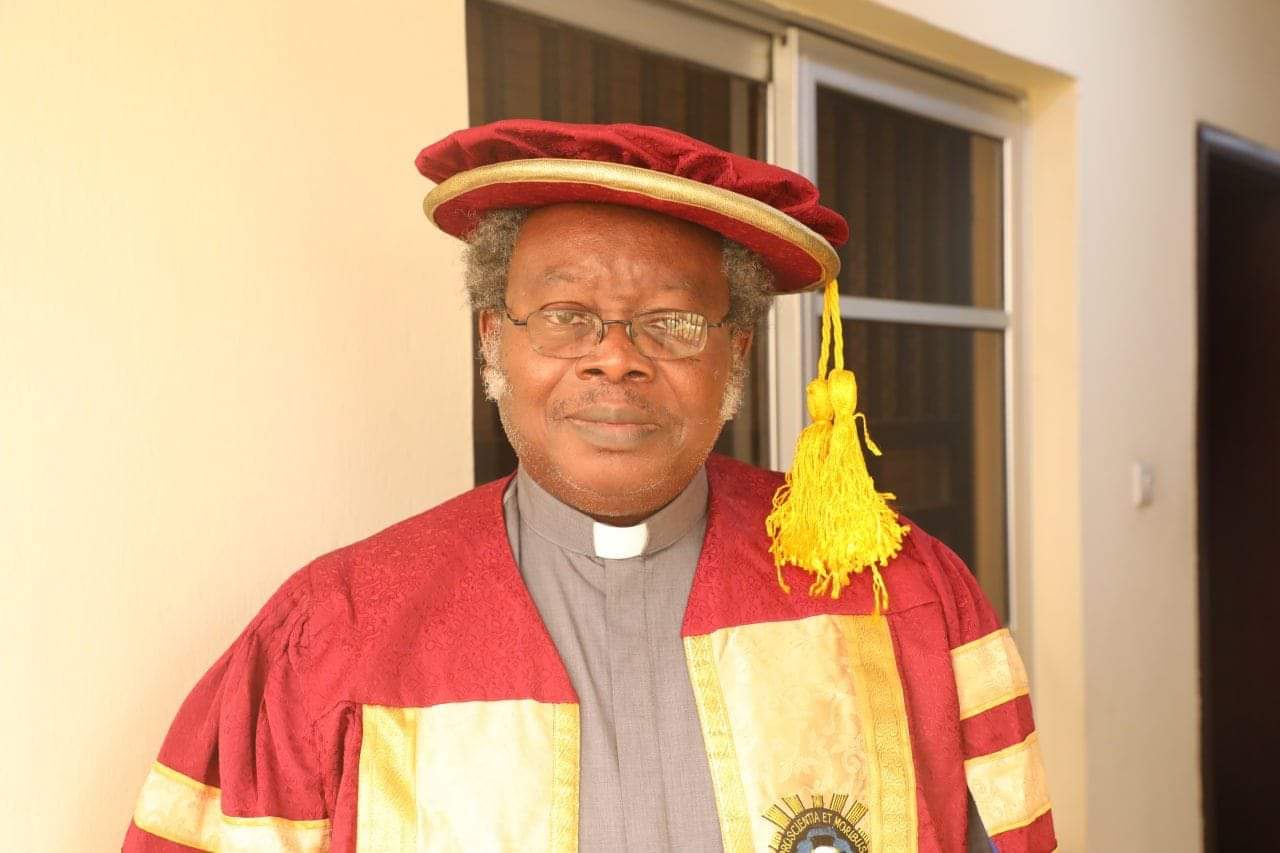
Fr. Anthony Akinwale, O.P.


Leave a Comment