

On the third day Christ was raised to life
Easter Sunday, April 5, 2026
The idea of life after death has always evoked different reactions from different people. For example, the late President Fidel Castro of Cuba was asked during a television interview if he believed in life after death. His response: if there is such a thing it would be a pleasant surprise.
Another example. In the 1st century, a Roman officer, named Cornelius, had invited the apostle Peter to tell him about the Christian faith. Peter spoke to Cornelius and his household in the words of the Second Reading of Easter Sunday: “Jesus,” said Peter, “went about doing good works and healing all who were in the grip of the devil . . . They killed him by hanging him on a tree, yet on the third day God raised him to life. . . .” Cornelius believed the testimony of Peter, and he and his entire household were baptized (Cf. Acts 10:34. 37-43).
In a world where knowledge has been reduced to natural and mathematical sciences, one hears the suggestion that no intelligent person can believe in the resurrection, and that, whoever believes the story is either a fool or a fanatic.
That this is an incredible story is vividly demonstrated by the third example I wish to give. This example is taken from one of the incidents that occurred during the preaching ministry of St. Paul. The apostle Paul had gone to preach about the risen Christ to the council of Greek philosophers in Athens (Read Acts 17:16-32). The story goes, in the Acts of the Apostles, that while Paul was speaking, they listened to him, until he mentioned the idea of rising from the dead. As soon as he mentioned the resurrection, some of them burst out laughing, while others told him to come back another time. “We would like to hear you talk about this another time,” they said.
But every Sunday, and every solemn feast of the Church’s calendar, when we gather to celebrate the Eucharist, we recite our Creed, and we profess that we believe this “incredible” story. Are we then fools or fanatics?
Every time we profess our faith, we say “We believe in one Lord, Jesus Christ, the only Son of God. . . he was crucified under Pontius Pilate; he suffered, died, and was buried. On the third day he rose again. . .”
Perhaps if Christians really thought about what they say when they recite the Creed some would stop going to Church. And indeed many have stopped because they no longer believe this incredible story. The interesting thing, however, is that while some have voted with their feet because they can no longer believe this story, many still believe it and remain in the Christian faith, and many others are just beginning to believe it.
At the Easter Vigil, in different parts of the world, many people are baptized into the Christian faith because, like Cornelius and his household, they believe the testimony of Peter about the risen Christ. At the same time that some of those who were baptized into this faith are no longer taking it seriously, some “outsiders” are showing interest and are committing themselves to it.
At Easter, we celebrate the incredible story that the resurrection is: that Jesus went about doing good, that he was put to death, but that God raised him up on the third day. That is the summary of what we believe as Christians, that is what Easter is all about. It is the most important article of Christian faith.
Easter is the celebration of the fact that because Jesus rose from the dead our own life has a meaning. Take the resurrection away and there is no Christianity left. Take the resurrection away and all that we do in the Church is a waste of time. If it is not true that Jesus was raised from the dead then this life is nothing but a tragic accident, and what we call Christianity is nothing but a disastrous neurotic disorder or a scam. St. Paul put it very well when he told the Corinthians that “if Christ has not been raised, then our preaching is without substance, and so is your faith” (1 Cor 15:14).
It has been said that seeing is believing. And that is true. What applies in the case of the resurrection, however, is a turning of that saying on its head. In the case of the resurrection, believing is seeing. The resurrection is not something to be proved, it is something to be experienced. To those who, in the absence of any visible evidence, firmly believe this incredible story, the resurrection of Christ gives the assurance that this life that we live is not a tragic accident.
“Death and life were locked together in a mysterious struggle. The Lord of life died; now he reigns, never more to die” (Easter Sunday Sequence). He conquered death for you and me, so that the evil that death is will not have the last say in our lives. His victory over death changes our life, so that we can no longer live as if everything about human life began and ended here. Because of his victory over death, what we heard from the letter to the Colossians during the Second Reading on Easter Sunday is true: “Your life is hidden now with Christ in God. When Christ our life appears, then you shall appear with him in glory” (Col 3:3). And because the life of a Christian is hidden in Christ, a Christian can no longer live a life of seeking the interest of the self for the sake of the self and the self alone.
“God raised him up on the third day.” We do not understand how this is true. But we believe so that we can understand.
On this Easter Sunday, let ask God to raise up our country from the tragedy of underdevelopment. This tragedy in our land of unfulfilled potentials, populated by men and women of innumerable talents, is traceable to the failure to recognize our common humanity. Ours is a land of diversities—ethnic, religious, linguistic, etc. But we hardly dialogue because we are yet to take the humanity of others seriously. Our attitude of command and control, our bullying and intimidating conduct, these make due process unattractive. Why should I queue if I can push my way through? It is the attitude and conduct found among the leaders and the led.
It is particularly sad that successive governments and their officials—military and civilians—have failed to recognize the humanity of those they are supposed to govern. Civil servants have become uncivil masters. Those they serve have to stand up for them and give way to them lest security men on their convoy bang your car. But the problem with our country is not just with our leaders. Both leaders and led need profound attitudinal change. We see this in the fact that as soon as a government convoy passes, some members of the public, members of the oppressed class, jump the queue and follow the convoy creating more chaos on the road.
From the colonial era until now, government has always been more powerful than the people. Many government officials erroneously assume that their appointment to public office is a sign that they monopolize wisdom and patriotism. That is why policies are conceived and implemented without carrying the people along. The people are forced to be helpless bystanders while their fate is being determined by government and its officials. That is largely responsible for our status as an underdeveloped country. But experience shows that appointment to head a ministry or government parastatal in this country is not always predicated on the competence of the appointee but on the strength of his or her political connections. In Nigeria, you do not get into office simply because you are competent but because you are a protégé of the President or Governor or of one political “godfather”. The people can go to blazes after that since they neither elected nor appointed you.
On this Easter, when the Son of God died for us and rose to give us new life, we celebrate the redemption of the human race. If God could do so much for human beings, it becomes our own duty to avoid any speech, policy or conduct that violates human dignity. Let us therefore celebrate Easter by rising from disrespect to respect for the dignity of one another. Then our country will rise to new life.
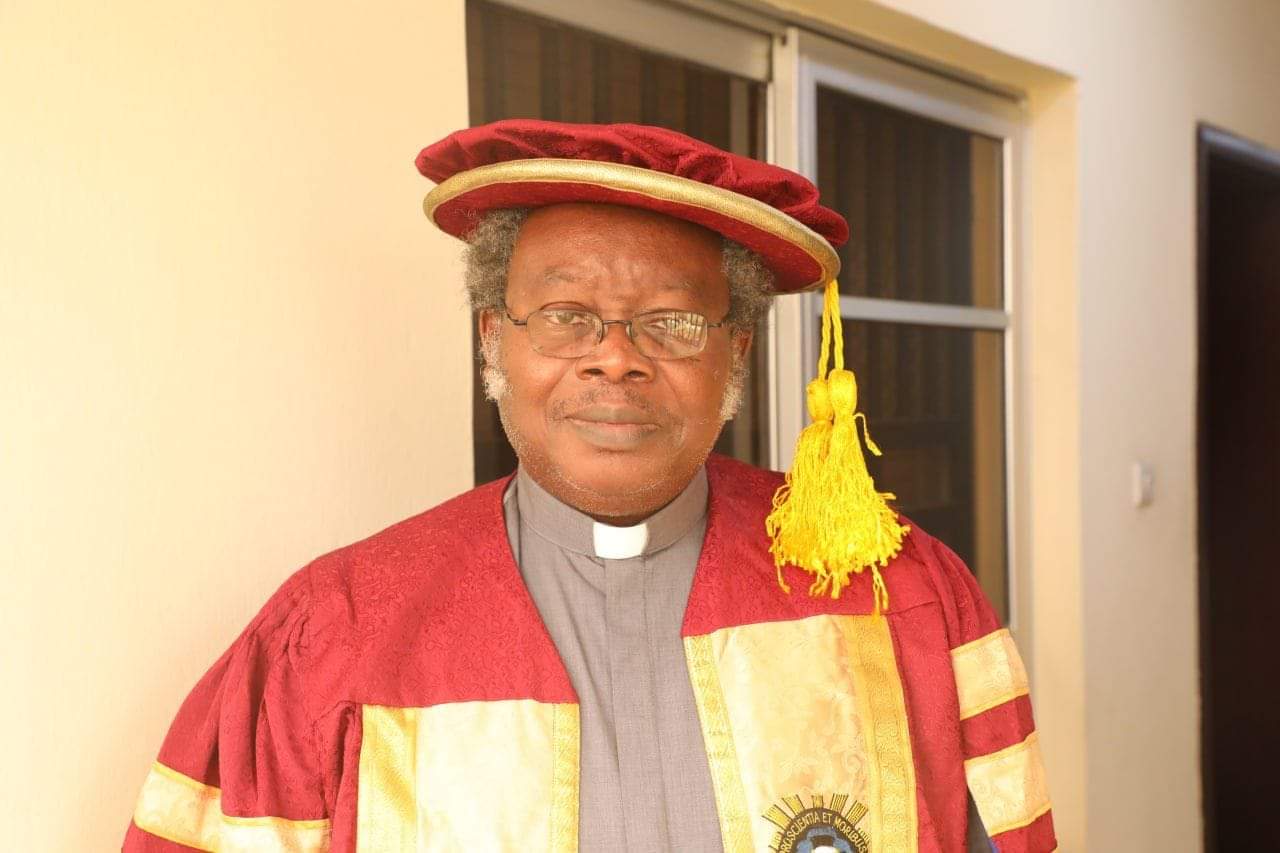
Father Anthony Akinwale, OP


Leave a Comment