

In preparation for Easter
Thought for the Week
March 22, 2026
The Catholic Church is rich in her tradition and uses this tradition to teach different aspects of the story of our salvation. This richness is clearly manifest in the origin and evolution of the Lenten season. A careful study of this evolution shows that what is set before our eyes is not just a series of changes made according to the whims and caprices of a few individuals. In fact, one can say with convenience and conviction that tradition is the Holy Spirit teaching the Church how to teach.
“Christ, our Paschal Lamb, has been sacrificed. Therefore, let us celebrate the festival, not with the old leaven, the leaven of malice and evil, but with the unleavened bread of sincerity and truth” (1 Cor 5:7-8).
These words of the Apostle Paul to the Corinthians will be read in the liturgy at Easter. But already, in the season of Lent, we can find them useful as they provide a piece of evidence that enables to understand the origin of Lent as preparation for Easter.
The season of Lent is a period of 40 days of preparation for the feast of Easter. The Church, from the time of the apostles, every week, recalled in celebration the resurrection of our Lord from the dead. The words of St Paul, which have just been quoted, provide us with evidence that the Church in the time of the apostles used this weekly celebration to shed the light of her faith on the annual celebration of the Jewish Passover.
Thought of an annual celebration of Easter, apart from the weekly celebration, is to be traced to the early years of the second century. The Church of Rome was late in accepting this tradition of annual celebration of Easter. She did not accept it until the second half of the same century. Even then, there were two ways of calculating the date of Easter. The first was the way of the Churches of Asia Minor. These Churches insisted on Christianizing the day of the Jewish Passover, the fourteenth day of Nissan. They therefore concluded their fast on that day. The second way of dating Easter, which was the way of the other Churches including the Church in Rome, involved the celebration of Easter on the following Sunday, Sunday being “the first day of the week”, the day the Gospel said our Lord rose and appeared to his disciples. In addition, calculating the fourteenth day of the lunar month of Nissan differed from calculating it in a solar calendar.
The intervention of Pope Victor around 189-98 attempted to reconcile the two dates. A more decisive intervention came at the Council of Nicaea in 325 when the Council urged all the Churches to subscribe to the Alexandrian calculation of the date. With this, Easter began to be celebrated on the Sunday following the first full moon, after the spring equinox, precisely between March 22 and April 25.
At the beginning of the third century, the celebration of Easter lasted fifty days—the Pentecoste. From the fourth century, new features were added to the celebration: the fiftieth day began to be marked by special observances; the “sacred triduum of Christ crucified, buried and risen” was introduced; and later, the celebration of Holy Week. From an early date, a fast on the days marking the suffering and death of Christ was introduced to accompany Easter celebration. This was later extended to last forty days, the forty days of Lent spent in preparation for Easter.
In the Church of Rome, preparation for Easter seemed to have begun as a week of fasting before the Easter Vigil. That week began on Sunday with the reading of the passion narrative. The Wednesday of the week was like Good Friday. The Eucharistic sacrifice was not offered. This week-long preparation was extended to three weeks, counted back from Easter Sunday, and to forty days sometime between 354 and 384. During these forty days, at the time Leo the Great was Bishop of Rome, fasting was observed from Monday to Saturday, with official assemblies on Wednesdays and Fridays without Eucharistic sacrifice. In all this, care was taken to exclude Sunday from days of fasting.
At its inception, the purpose of the forty-day fast was more to celebrate our Lord’s fast in the desert than to prepare for Easter. It later but quickly assumed a penitential character in preparation for the celebration of the death and resurrection of Christ, echoing as it were the words of St Paul, “let us celebrate the festival, not with the old leaven, the leaven of malice and evil, but with the unleavened bread of sincerity and truth”. Apart from this fast, there was already an observance of fast on Mondays. Tuesdays, and Thursdays throughout the year. The Lenten fast was an extension of the observance of fast during these days of the year. It simply added Wednesdays and Fridays, while Saturday was observed in Rome as one of the days.
But fasting alone cannot be said to be enough. Fathers of the Church like Leo the Great, Augustine and John Chrysostom, inspired by the teaching of our Lord in the Gospel read to us on Ash Wednesday (Mt 6:1-18), associated fasting with almsgiving and prayer. It is a question of fasting and charity, of fasting accompanied by prayer and listening to the Word of God.
By the fourth century, Lent became a most suitable time to prepare catechumens for baptism at the Easter Vigil. It also became a time to prepare for reconciliation since the vigil itself, in which the reconciliation between God and human beings through the death and resurrection of Christ Jesus is celebrated, would be the most appropriate time to receive sinners back into communion with the Church. It is to be noted, however, the Church in Rome observing a different custom, had this reconciliation on Holy Thursday.
We can learn many things from the story of the origin and evolution of Lent. But we can sum up these lessons: the early Christians not only celebrated the victory and power of the risen Christ every Sunday and at Easter, they took care to prepare for this celebration by struggling to walk closer with the Lord.
It is true that every day in the life of a Christian is a day to deepen one’s love for God and neighbour. But the preparation for Easter that the Lenten season is summons us to be even more ardent in our desire to love God and neighbour. The real fast is not just from food and drink but from acts and thoughts of hatred. And that changes the way religion, especially Christianity, is perceived and practiced in contemporary Nigeria. Insatiable appetite for miracles of prosperity and breakthrough, the distinctive characteristic of popular religiosity in Nigeria, shows us without any ambiguity that Christianity in Nigeria has been reduced to a daily Easter without preparation. Everything is centred on me and my miracle that is on the way. These days, when we fast, it is to bribe God, to make him change his mind, and to make him do my will. The problem is compounded when some of us Catholics, we who ought to be emulated, begin to emulate what we ought not to emulate.
The Lenten season is teaching us that authentic Christianity is a lifelong preparation and a lifelong struggle to embrace a loving God whose love is often rebuffed by our self-centredness, by our insistence that God must love us and do things for us on our own terms. Lent is a time to abandon the futility of idolatry of the self, of prioritizing my own preferences, instead of seeking to do the will of the Almighty.
Lent provides an opportunity to clean up the way we practice religion, and that will have a positive impact on the way we do politics. For the way we relate with God and the way we relate with our neighbour resemble one another. Violate the rights of God and you violate the rights of human beings, violate the rights of human beings and you violate the rights of God. Give God his dues and you will give human beings their dues, give human beings their dues and you will give God his dues. Such is the powerful implication of the greatest commandment: love God and love your neighbour.
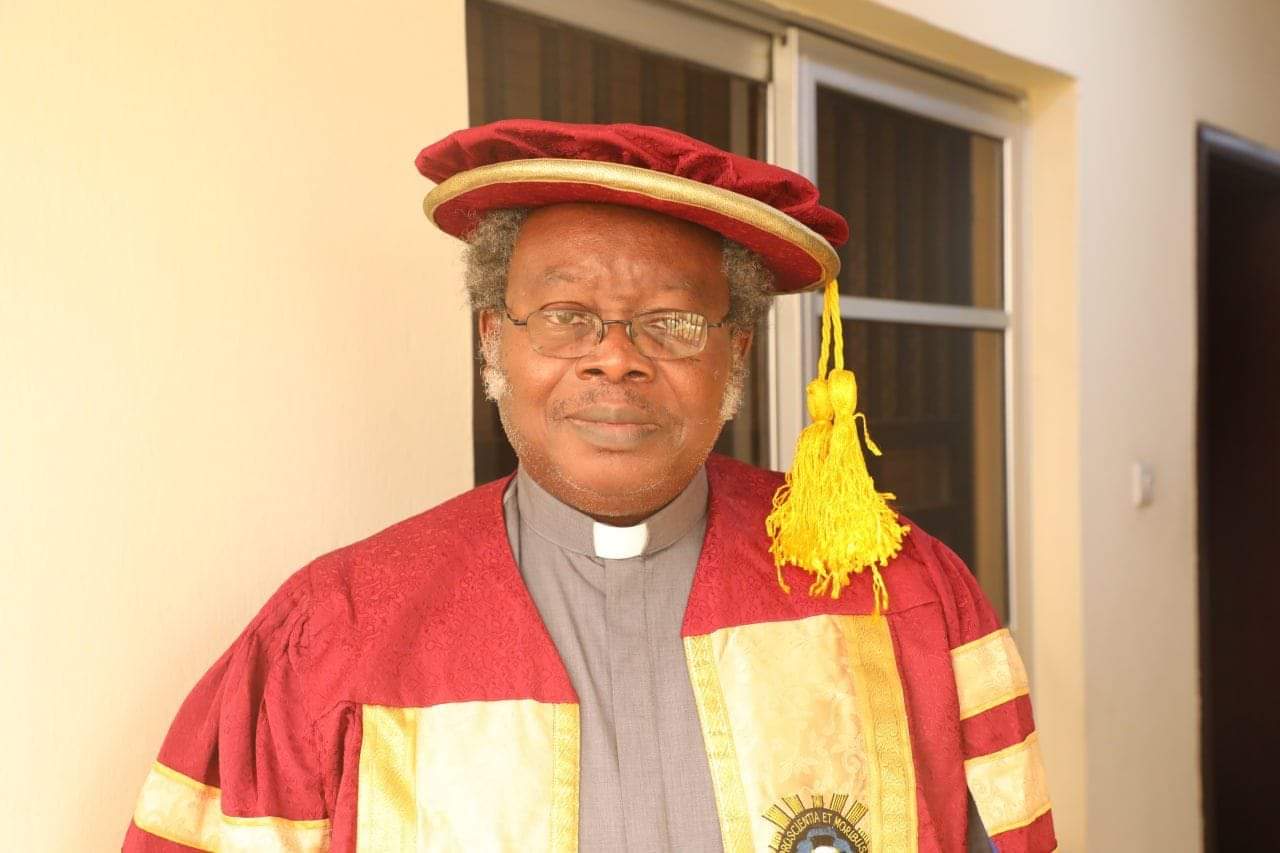
Father Anthony Akinwale, O.P.


Leave a Comment