

FAO–JDPC Partnership Boosts Fish Farmers’ Skills in Kwara, Ogun
Adekola OJERINDE
Fish farmers under the FISH4ACP, an FAO project being implemented by the Justice Development and Peace Commission (JDPC) Ibadan, have demonstrated improved aquaculture practices following field-based learning sessions held in Kwara and Ogun States.
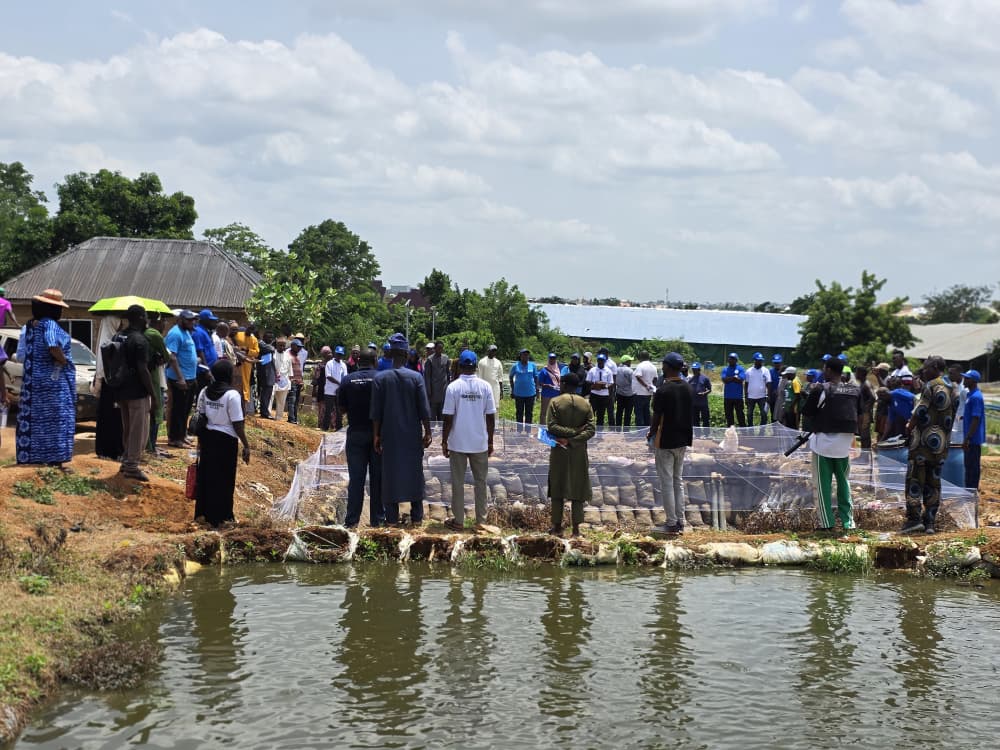
The demonstration exercises, held at the Association of Fish Farmers in Kwara State (AFFAK) Secretariat in Ajegunle and at the IDIPR Farm Settlement in Eriwe, Ijebu-Ode, Ogun State, provided farmers with the opportunity to showcase what they have learned so far under the project, while also giving stakeholders firsthand insight into how the training is being applied to improve farm practices at the field level.
According to the Project Manager, Anthony Adedeji, the exercise was designed to enable farmers demonstrate the skills and knowledge they have acquired under the ongoing project and allow stakeholders to observe how these lessons are being translated into improved aquaculture practices.
Representing the Kwara State Commissioner for Agriculture, Nasir Akogun noted that the FISH4ACP initiative aligns with the state government’s agricultural development priorities, particularly in promoting sustainable aquaculture and strengthening food security.
The Head of Administration and Special Duties of AFFAK, Engr. Olawuyi Abdulkareem, observed that the training has significantly improved farmers’ awareness and practice of planning and record keeping areas that were previously weak among many fish farmers. He added that the demonstration exercise has helped place farmers in the spotlight as capable and well-trained agribusiness operators.
Across both locations, farmers presented improved record books capturing stocking data, daily farm monitoring, and production tracking, reflecting strengthened business management practices acquired through the training.
The demonstration sessions also featured practical learning on planning and record keeping, emphasizing structured decision-making and consistent daily documentation for improved productivity. Pond preparation exercises further highlighted key steps such as drainage, de-mudding, pond repair, treatment, and proper stocking procedures.
A participating farmer, Mrs. Urubisi Joy, noted that the project has improved fish farming operations through better stocking practices, improved water quality monitoring, and consistent record keeping. She added that the demonstration exercise also provided learning opportunities for farmers who were not directly part of the training.
Overall, the exercise highlighted the impact of the FAO–JDPC partnership in strengthening sustainable aquaculture practices, improving productivity, and enhancing the visibility and capacity of smallholder fish farmers across participating states.


Leave a Comment