

Are You Ready For Ash Wednesday?
Do not receive the Ash on your forehead until you read this to understand what the Church teaches about Ash Wednesday
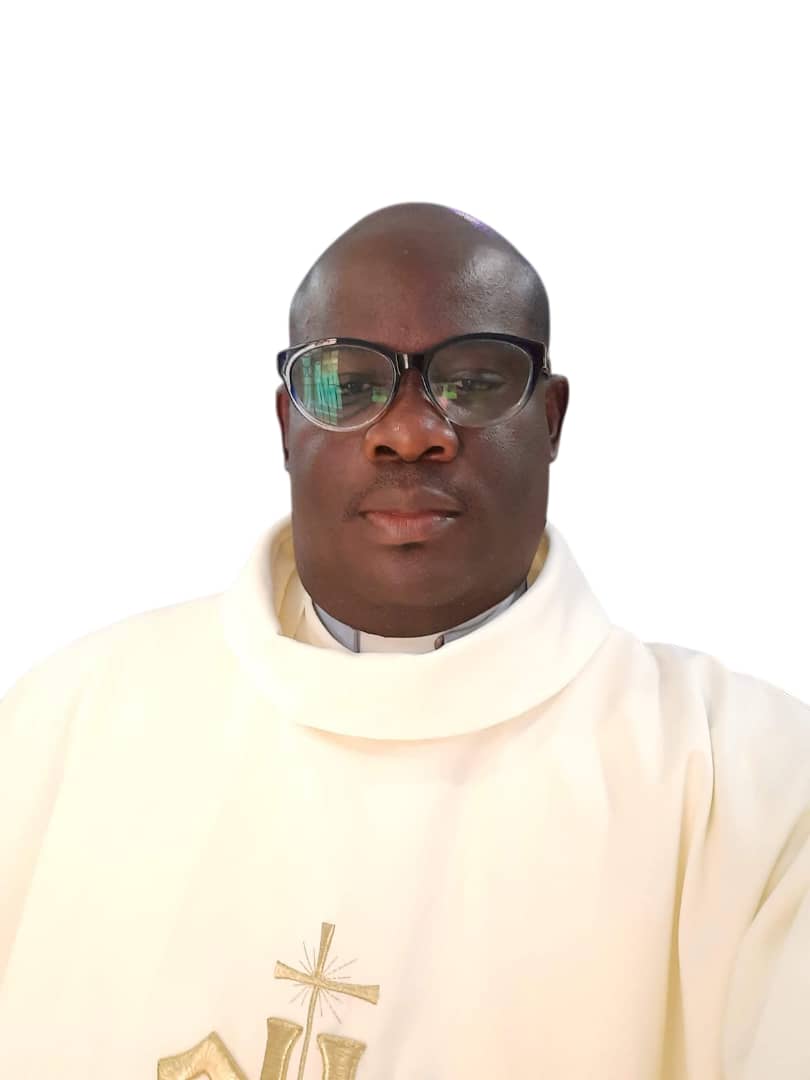
Fr. Lawrence OGUNDIPE, SDV
On a quiet Ash Wednesday afternoon, two children lingered in the Church compound, still marked with the dark sign of the cross on their foreheads. They played and laughed, innocent and carefree, as children always do, unaware of the weight of the sacred moment they had just shared.
In the middle of their play, one child, without much thought, brushed his hand across his friend’s forehead and wiped away the ashes. Suddenly, the other child froze. His face fell, not in anger, but in genuine distress. With the seriousness only a child can summon, he cried out, “You have wiped away my Lent!”
Before his friend could even apologize, the boy turned and ran back into the Church. He made his way straight to the priest, his small heart convinced of a great loss. With all sincerity, he asked to receive what he called “another Lent,” believing that the ashes were not just a mark, but Lent itself.
Is the Ash Your Lent?
Every year on Ash Wednesday long lines form in our Churches. Many come with sincere devotion, others out of habit, and some simply because it is what Catholics do on that day. Yet the Church quietly asks something deeper of us. Do not receive ashes until you understand what they mean. The ash placed on the forehead is not a charm, not a cultural mark, and not a yearly ritual for good luck. It is a serious sign of repentance and conversion, rooted in Scripture, shaped by history, and guarded by the living tradition of the Church.
The Biblical Roots of Ashes
The use of ashes as a sign of repentance and interior conversion is deeply rooted in Sacred Scripture and long predates Christianity. Throughout the Old Testament, ashes speak a powerful Biblical language: they express human frailty, sorrow for sin, mourning over brokenness, and a humble return to God. To sit in ashes or to cover oneself with them was a visible confession that life is fragile and that without God, the human person returns to dust.
In the Book of Job, after losing everything and standing before the mystery of suffering, Job humbles himself in ashes, acknowledging his smallness before the Almighty. He declares, “I had heard of you by the hearing of the ear, but now my eye sees you; therefore I despise myself, and repent in dust and ashes” (Job 42:5–6). Here, ashes become a sign of repentance born from encounter with God, not mere regret but a deep turning of the heart.
The story of Nineveh offers one of the clearest Biblical images of communal repentance. When Jonah proclaimed God’s warning, the people responded not with excuses but with humility. Scripture tells us, “The people of Nineveh believed God; they proclaimed a fast, and everyone, great and small, put on sackcloth” (Jonah 3:5). Even the king rose from his throne, covered himself with sackcloth, and sat in ashes, declaring, “Let everyone turn from their evil ways and from the violence that is in their hands” (Jonah 3:8). Ashes here symbolize a people who recognize their sin and place their hope in God’s mercy.
The prophets repeatedly used this imagery to call Israel back to covenant faithfulness. Through the prophet Joel, the Lord summons His people to a repentance that is both outward and inward: “Yet even now, says the Lord, return to me with all your heart, with fasting, with weeping, and with mourning” (Joel 2:12). Joel goes further, insisting that true repentance must touch the heart: “Rend your hearts and not your garments, return to the Lord your God, for he is gracious and merciful” (Joel 2:13). Ashes, therefore, are not magic or empty ritual; they are meant to reflect an interior transformation.
Other Biblical texts echo this same symbolism. Daniel prays in sackcloth and ashes as he confesses the sins of the people (Daniel 9:3–5). Esther calls the Jews to fasting and mourning in ashes at a moment of national crisis (Esther 4:1–3). Even the psalms give voice to this posture of humility, when the psalmist laments, “I eat ashes like bread and mingle tears with my drink” (Psalm 102:9).
When the Church places ashes on our heads on Ash Wednesday, she is deliberately speaking this ancient Biblical language. She reminds us that conversion is not merely an idea, a feeling, or a seasonal mood, but a concrete decision to turn back to God. The ashes preach silently what Scripture has proclaimed for centuries: we are dust, we are in need of mercy, and yet we are never beyond the reach of God’s compassion.
Ashes in the Early Church
In the first centuries of Christianity, the use of ashes was not a mere devotional symbol but a concrete expression of ecclesial discipline and conversion. The early Church understood sin, especially grave sin, as a rupture not only with God but also with the Body of Christ. For this reason, repentance was public, demanding, and deeply communal. Ashes became one of the most visible signs of this serious return to grace.
From as early as the second and third centuries, Christians who had committed grave offenses such as apostasy, murder, or adultery were admitted into what was known as the ordo paenitentium, the order of penitents. According to the Didache and later clarified in the Apostolic Tradition attributed to Hippolytus of Rome, reconciliation after grave sin was a structured and supervised process under the authority of the Bishop. Entry into this penitential state marked the beginning of a long journey of conversion rather than an instant restoration.
Tertullian, writing in his treatise De Paenitentia, describes public penance as a humbling and visible act. He speaks of penitents who “lie in sackcloth and ashes,” fasting, weeping, and begging the prayers of the Church. For Tertullian, these external signs were not meant to humiliate but to heal, making visible the seriousness of sin and the greater seriousness of God’s mercy.
By the fourth century, this practice had become more formalized. The Council of Nicaea (325), in Canon 11, refers explicitly to different stages of penance and the gradual readmission of penitents to the liturgical life of the Church. Those undergoing penance were excluded from the Eucharistic assembly, though they remained under the care and prayer of the Christian community. The imposition of ashes and the wearing of sackcloth at the beginning of Lent marked their official entrance into this penitential state.
The Apostolic Constitutions further describe how penitents stood outside the Church doors, asking the faithful to intercede for them, while the Bishop laid hands on them and imposed penitential signs. Lent thus became the privileged season for this intense conversion, culminating in reconciliation on Holy Thursday. This practice emphasized that forgiveness was both a gift from God and a restoration to ecclesial communion.
The Catechism of the Catholic Church later summarizes this ancient discipline when it teaches that in the early Church “reconciliation with the Church was obtained only through a long and severe penance” (CCC no 1447). Ashes, therefore, were not decorative or optional; they signified a real exclusion, a real sorrow, and a real hope of return.
Ash Wednesday, as it developed from this tradition, was never intended to be a sentimental observance. It marked the beginning of a painful yet grace filled journey back to full communion with God and the Church. Though the discipline of public penance has evolved, the Church preserves the sign of ashes so that every Christian may remember that conversion is costly, mercy is transformative, and reconciliation is always possible for those who truly return to the Lord.
From Public Penance to Universal Practice
As centuries passed, the strict system of public penance gradually disappeared. However, the Church did not abandon the wisdom behind it. By the tenth and eleventh centuries, the practice of receiving ashes was extended to all the faithful. What was once reserved for public sinners became a universal confession of truth. We are all sinners. We all need conversion. The ash no longer expelled us from the community but invited us to walk together as a penitent Church toward Easter.
When the priest says "Remember that you are dust and to dust you shall return," the Church is not trying to frighten us. She is teaching us humility. Life is fragile. Power fades. Wealth disappears. Only God remains. When the priest says Repent and believe in the Gospel, the Church calls us to change direction. The ash on the forehead is a visible homily preached without words. It tells the world that this Christian has chosen repentance over pride and hope over despair.
Why the Church Insists on Fasting and Abstinence?
Ash Wednesday is not only about receiving ashes. It is a day of fasting and abstinence because repentance must touch the body as well as the soul. Fasting disciplines desire. Abstinence teaches restraint. These practices unite us with Christ in the desert and with the poor who experience hunger daily. The Church insists on fasting because conversion without sacrifice easily becomes empty emotion. The law of fasting is not punishment. It is medicine for the soul.
The Church clearly teaches that fasting binds Catholics from adulthood to later life, while abstinence from meat binds from early adolescence. At the same time, the Church shows maternal wisdom by dispensing the sick, the elderly, pregnant women, and those whose health would be harmed. This balance reveals the heart of Catholic tradition. Discipline is important, but life and charity are more important.
The Necessity of Understanding Before Receiving Ashes
To receive ashes without understanding is to reduce a sacred sign to a social custom. The Church does not force ashes on anyone. She rather invites us to come forward if you want it. Receiving ashes is a public act of faith. It says I accept that I am a sinner. I accept the call to conversion. I accept the discipline of Lent. Without this interior consent, the external mark loses its power. The Church prefers a smaller number who understand to a large crowd who do not.
Ash Wednesday is not an isolated event. It opens a season. The ashes will be washed away, but the conversion must remain. Prayer must deepen. Fasting must continue. Charity must grow. The Church intends Ash Wednesday to set the tone for the whole of Lent, leading the faithful from repentance to renewal and from the cross to the resurrection.
Before stepping forward to receive ashes, pause. Listen. Reflect. Ask yourself if you are ready to walk the Lenten journey with sincerity. The Church does not ask for perfection, but she does ask for honesty. When you understand what the ashes mean, then receive them. Not as a habit, not as a badge, but as a promise made before God. Then the ancient tradition of Ash Wednesday will truly shape your life and prepare your heart for Easter.


Leave a Comment