

The Loss of Solemnity in Liturgical Celebrations
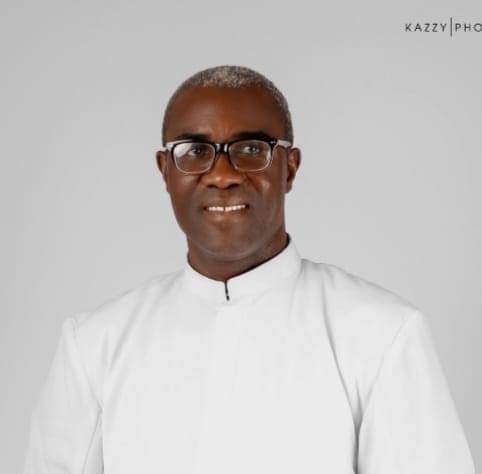
Fr. Richard OMOLADE
Catholic celebrations are our foretaste of the divine, it is our opportunity to participate in the celebration of the blessed, where the cherubim and seraphim praise and worship God ceaselessly. Thus, the Mass, the sacrifice of Jesus Himself, is not our celebration, it is the feast of God to which we have been invited. We are guests, God is the one who has invited us, and He is in charge. Our attitude is thus not directed to ourselves. We are called to worship God, hence all aspects of the Mass are designed to help us fit it well, so that we can offer a fitting sacrifice to God. Our Mass is not what we do for ourselves or by ourselves. The Mass is what God has done for us in Christ. The solemn nature of this event is beyond our making – it is divine in its very essence. Divine celebrations have their distinctive characters. They are purposefully ordered; they may be simple, intricate and short but not unduly long. They are usually not repetitive. Divine events that form our encounter with the divine are usually attractive and inspirational. In such encounters, the divine is made manifest. God reveals Himself to us and would not leave us untouched if we approach Him with simplicity and humility.
Today, many celebrations, even in our Churches are no longer solemn. In our desire to create our own meaning, many celebrations have been denuded and demystified. God is still there, but only experienced as if as a result of doping system. We design songs to lift us up and make us feel good instead of drawing us into the presence of the divine and giving God all the glory. Solemn songs are no longer coveted, but emotional songs with cathartic flavours. The lyrics may be reflective, but it is the rhythm that dries the crowd into frenzy that wins ultimately. Today, our people no longer know how to bow or submit to the divine, they would rather dance away their sorrow and pick them up when the effect of the frenetic dancing had waned. During this festive season, we are called back to Bethlehem, precisely the manger. There we shall encounter Christ and give Him His due home like the angels did. Hark herald the angels sing is a solemn song, devoid of the cacophony of our present-day life, it is full of devotion and love for the newborn King. “Glory to God in the highest” that the angel sang, calls us to lift our voice is joyful song to the maker and creator of all – it is a song of adoration, not a concert song. We are called to the presence of God, not to concert of celebrities. We are called to worship and worship is a sacred experience not entertainment.
Much of modern day or contemporary worship song has taken on the garment of entertainment. The more entertained we are the more meaningful people acclaim the worship to be. The atmosphere is often electric, but the focus is on the entertainer and the entertained, while we pretend to be focused on God. “Be still and know that I am God” is far from the lived experience of people. No wonder many solemn celebrations leave many people empty, distracted and feeling lost. We must reclaim the divine aura of our worship, and this must start by acknowledging that the Church is a sacred place, and a place of encounter with the divine and not a hall for entertainment. Moving past this, we must realize that certain acts are befitting, and some are not befitting of that sacred place. Our songs must have a special character about them that makes them distinctly religious and spiritual and able to invoke in us deep spiritual feelings. This is one of the manners in which religious language is different from our ordinary day language. In the same way, spiritual songs must be distinct from secular hymns, and for all of us culturally minded people, we must therefore distinguish between sacred dance and secular or cultural dance. Much of the dancing going on in many Churches today, are supposedly termed emotive, but they are simply profane and seductive.
I know some people will draw my attention to the fact that certain practices have been taken over in the past and baptized and are now seen as Christian practices, but there is great confusion if we continue to mix the sacred with the profane to the extent that while the profane are welcomed in our Churches, the sacred are clearly banned from the secular arena. Consequently, it behooves on Christians to uphold the integrity of their worship by sticking to sacred rites and practices instead of an admixture of the two. Let us remember how mothers rock their infant, with soothing words and gentle melody, and with deep affection and devotion. We must bring this back to our liturgical celebrations. Even if we couch our language in royal terms, kings are treated with honour and decorum, with calculated gestures of obeisance and with soft panegyric rather than rowdy Acclamation and shouts.


Leave a Comment