

Politics Begins at Home
Thought for the Week, December 28, 2025
The word “economy” comes from the Greek word “oikonomia”, a word that comes from two words, namely, “oikos”, which means “home”, “house” or “household”; and “nomos”, which means “law” or “management”.
From these words, we learn that “oikonomia” or “economy” originally meant in Greek laws that regulate management of the home or prudent use of resources of the home in the management of the affairs of the home. The application of this word to describe home management would later change.
Whereas in antiquity the word was applied to describe home management, in the modern era, in the 17th and 18th centuries precisely, the word “economy” began to be applied exclusively to matters of production, distribution and consumption of what is produced.
Going back to the era of Greek philosopher, Aristotle, the home or the household was understood to be the nucleus of the city, the heart of common life. By implication, if we are to manage our common life properly, our homes must be properly managed. If we are to manage the affairs of our city properly, which is the proper function of politics, we must begin by managing the affairs of the home rightly. For, it is from homes that cities are formed, and, from several cities, nations are formed. A nation is an association of cities, and a city is an association of homes. A home is an association of father, mother and children. That is why politics, right ordering of the affairs of nations and cities, begins at home, in right management of the home, of the family. Indeed, politics begins at home.
There is need to seek recourse to the classical notion of economy if the modern notion of economy is to lead to the flourishing of the human person. The modern notion will not be discarded. The classical notion implies a notion of the human person which is often ignored by an exclusive understanding of economy in terms of production, distribution and consumption. The human person is not to be reduced to a mere bundle of sensations who is an agent of production, distribution and consumption. The human person is, first and foremost, a creature of divine love, and of human love that mirrors divine love in the common life of fathers and mothers and their children.
Love is the natural habitat of the human person. Without love, we reduce one another into unwilling tools of power addiction deployed for maximizing production, distribution and consumption. Love is understood here not as feelings, but as the constant willing of the good of the other person.
In the arena of economics, understood exclusively in the modern sense, we human beings become exploiters of and exploited by one another, persons who do not will the good of other persons. At that point, we may have material abundance, sophisticated technical infrastructure, and other indices of a buoyant economy, that is, in the modern sense. But where and when we do not relate as persons who love, that is, as persons who will the good of one another, material abundance will suffocate some, while economic deprivation will annihilate others.
If it is from our homes that our cities are formed, and if politics is the intelligent management of affairs of the city, or, as is the case with a nation, intelligent regulation of the affairs of the association of cities, one would be logically bound to concede that politics begins at home. It becomes clear, therefore, that the condition of our country is a reflection of the condition of our homes.
The home is where we begin to learn to love. As the primordial school of love, it has two teachers, namely, the father and the mother, a husband and a wife whose loving relationship bears fruit in children, children who find in their parents teachers who teach how to love by loving, that is, by example more than by precepts.
We must say, however, that if the home constitutes and determines the city, the home too has the potential to constitute and determine the marketplace, and the market is in the city. If the home constitutes and determines the city, and if the home has the potential to determine the market, the role of parents is to play a loving collaborative role in the constitution and determination of our common life through the way they relate with each other, and the way they relate with their children.
We often blame our political leaders for the sorry state of our country. And, by their hugely worrisome conduct, they deserve to bear a huge portion of the blame. But the story of our sorry state, the sorry state of Nigeria, would be utterly incomplete if we were to ignore the role parents play or refuse to play. If there are parents who tell lies, and teach their children to do the same, which is something I have experienced so many times while dealing with students, then the children may become liars. And if such children one day find themselves at the helm of affairs in this country, their manner of relating with Nigerians will be marked by that acquired propensity for falsehood inherited from the home, from their parents. That is why, when it is said that charity begins at home, which is true, we must also admit that incivility begins from home.
Incivility is the antithesis of politics, and, by way of a grotesque misuse of words, much of what is paraded as politics in the world today is not politics but incivility. A more proper name would be brigandage. In the build up to the 2027 elections, incivility is instantiated when a candidate who campaigned for public office on the ticket of a political party, decamps from that party to another party, while, by way of an unconscionable breach of contract, he holds on to the office to which he was elected by virtue of his party affiliation at the last election.
Incivility prevails where and when a land is afflicted with heightened insecurity, while those who are responsible for ensuring that the country is safe no longer care about our security but only about the security of their stay in power. Incivility is putting your election over and above governance.
Incivility begins at home. It begins when the home is turned into a foyer of infidelity and falsehood. It is counteracted when love and honesty direct the affairs of the home. That is what we learn from the Holy Family of Nazareth, the family of Jesus, Mary and Joseph.
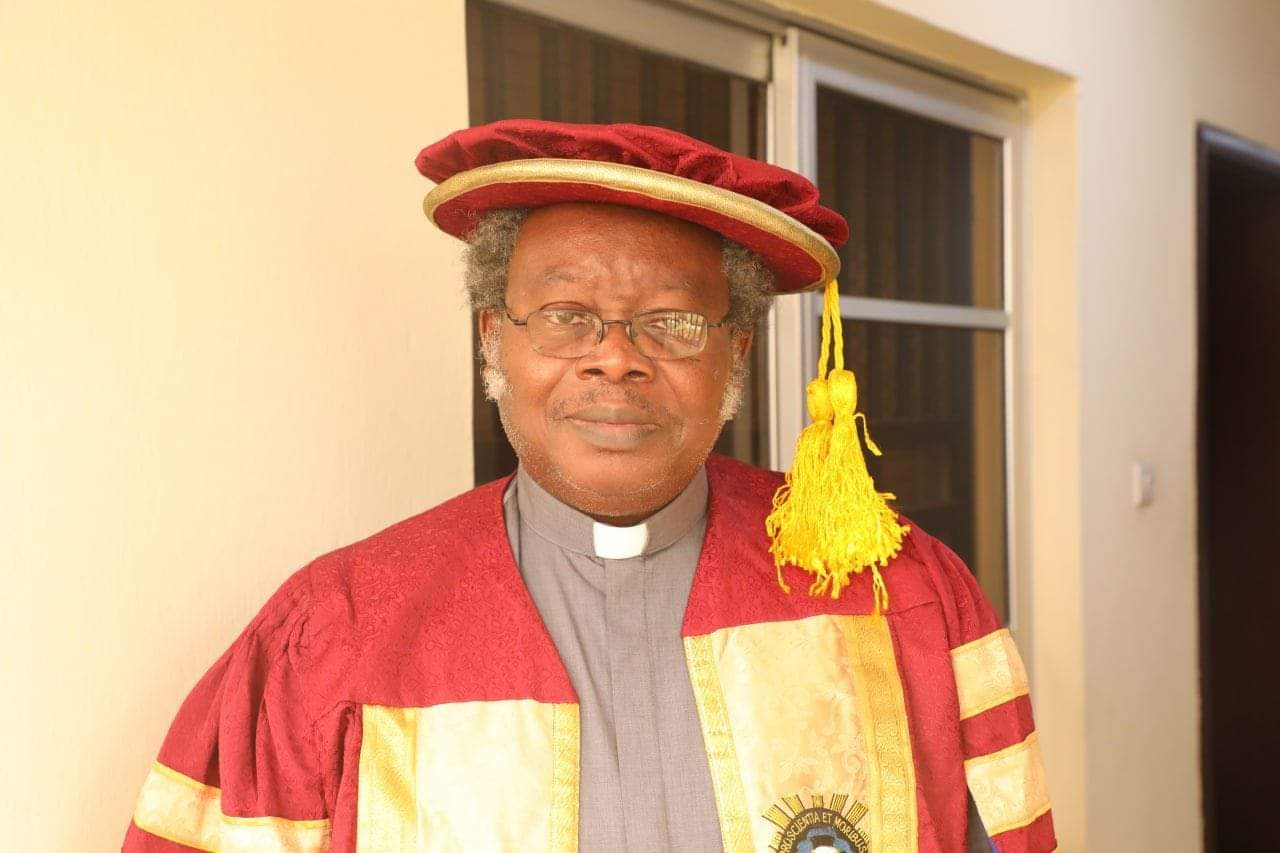
Father Anthony Akinwale, OP


Leave a Comment