

“Are you ‘He who is to come?”
Vox populi vox Dei. “The voice of the people is the voice of God”. So goes a saying. But the statement is not always true.
The voice of the people is not always the voice of God. There are times when pleasing the crowd and pleasing God are two different things. Whoever says what the crowd wants to hear will be applauded. But whoever says what the crowd needs to hear must be ready to pay the prize.
When John the Baptist preached with authority about the imminence of the kingdom of heaven, his language was marked by conviction and severity. To his audience he offered two choices: conversion, so as to participate in the coming reign of God, or, punishment and destruction. John ended up in prison as a result of his fire‑brand preaching. He took a stand, he spoke the truth to the face of the world. By so doing, he ruffled the feathers of powerful leaders of his time, especially King Herod, whom he had rebuked for taking his brother’s wife.
While in jail, John seemed to have had cause to doubt who Jesus was. John had preached to the people about the Messiah, “the one who is to come”. He had told the people about the anger with which the Messiah would deal with sinners. But when Jesus came, he was not punishing sinners. He was welcoming them, he was winning and dinning with them.
Like the devout Jews of his time, John expected the arrival of the Messiah to be an era when captives would be released. But there he was, in prison, a captive himself. The era of the Messiah was to be an era in which the oppressed would be liberated from the unjust rulers of the time. But there was John in prison for criticizing an unjust ruler.
We can therefore understand why John seemed to have doubted the messianic credentials of Jesus. We can see why he sent his disciples to Jesus to put the question to him: “Are you ‘He who is to come’ or do we look for another?”
The expression “He who is to come” refers to the Messiah. For John the Baptist, Jesus did not seem to have done what was expected of the Messiah. Perhaps a follow‑up to that question would have been: “If you are the one, why am I languishing in jail?” Why are you a friends of sinners? Tax collectors, corrupt public officials, are inviting you to eat with them, using ill-gotten money to feast you. And you accept their invitation. Why? Are you really the Messiah?
It seems we too find ourselves in situations in which we are tempted or forced to ask this or similar questions; situations which make us wonder if Jesus is really “the One who is to come”, the Messiah, the Saviour of the world. There are times when the burden of human existence becomes unbearable for some. There are captives who are in dire need of liberation from physical or emotional imprisonment or both; there are some who have been rendered incapable of seeing the realities of the world around them because of false propaganda, the well-conceived process of informing to misinform. We also think of the untold hardships inflicted on large segments of world population by the policies of those who hold the destinies of their fellow‑citizens in their hands. How about our situation in Nigeria where we are preparing to celebrate the coming of the Messiah in a climate of insecurity?
In the face of all this, if Jesus were to appear physically in Church today, one should not be surprised to find the question of John the Baptist thrown at him again: “Are you ‘He who is to come’ or do we look for another?” Are you really the Saviour of the world?
Christianity is a message of hope, and the message of Advent is not an illusion. It is a message of hope. We hope in God’s personal intervention; an intervention that will put an end to the misery and the chaos which mark our world today. The message of Isaiah in our last week First Reading is very relevant today.
To a people going through the trauma of domination and exile Isaiah painted a picture of what would happen when God intervenes; to them Isaiah had described the things the Messiah was to accomplish in an era of joy and gladness, an era when sorrow and lament will take flight because of miraculous healings: “Then will the eyes of the blind be opened,” those who have been blinded by misinformation; the ears of the deaf be cleared,” so they can hear the marvels of God. “Then will the lame leap like a stag,” to dance to the music of the victory of good over evil; “and then the tongue of the dumb will sing,” about the wonders of God.
The answer Jesus gave to the disciples of John the Baptist was indicative of the fact that in him, the prophecy of Isaiah has come true: “Go back and report to John what you hear and see: the blind recover their sight, cripples walk, lepers are cured, the deaf hear, the dead are raised to life, and the poor have the good news preached to them.”
In those words, we also have cause to believe that the prayer of the psalmist has been answered. “O Lord, come and save us,” he prayed.
Salvation is a bringing back to health, the restoration of wholeness. We believe that in the man Jesus, God is restoring the world back to its original wholesomeness. That is why we are Christians.
That we may experience the effect of the salvation Jesus has brought, patience and collaboration are needed; patience for the complete fulfillment of our hopes; collaboration with God ‑ for, to paraphrase St. Augustine, God who created us without our collaboration wants to save us but not without our collaboration.
We also need to collaborate with all men and women of goodwill to put an end to the misery and chaos of our time, for the Spirit that blows wherever he wills also inspires men and women outside the Christian community.
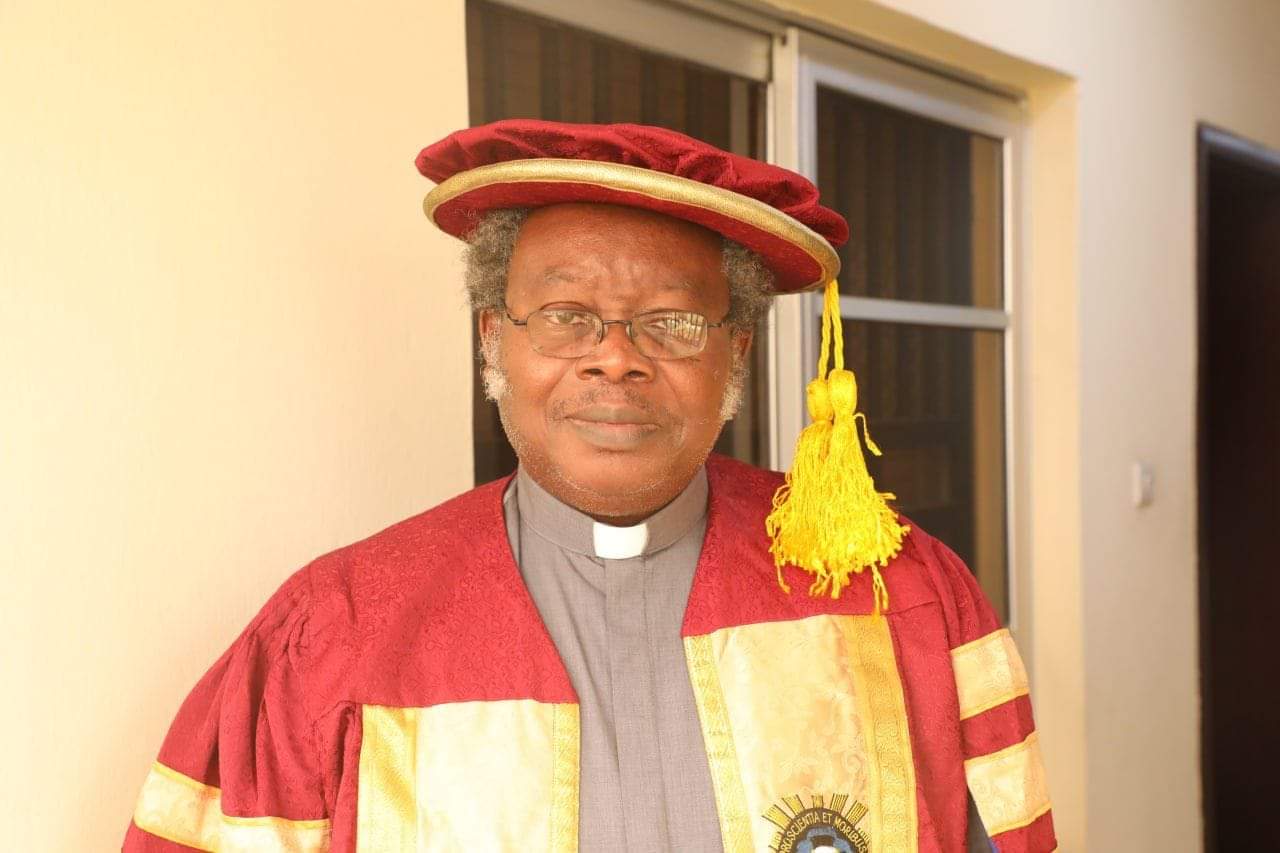
Fr. Anthony A. Akinwale, O.P.


Leave a Comment