

The Harmony That Was Meant To Be
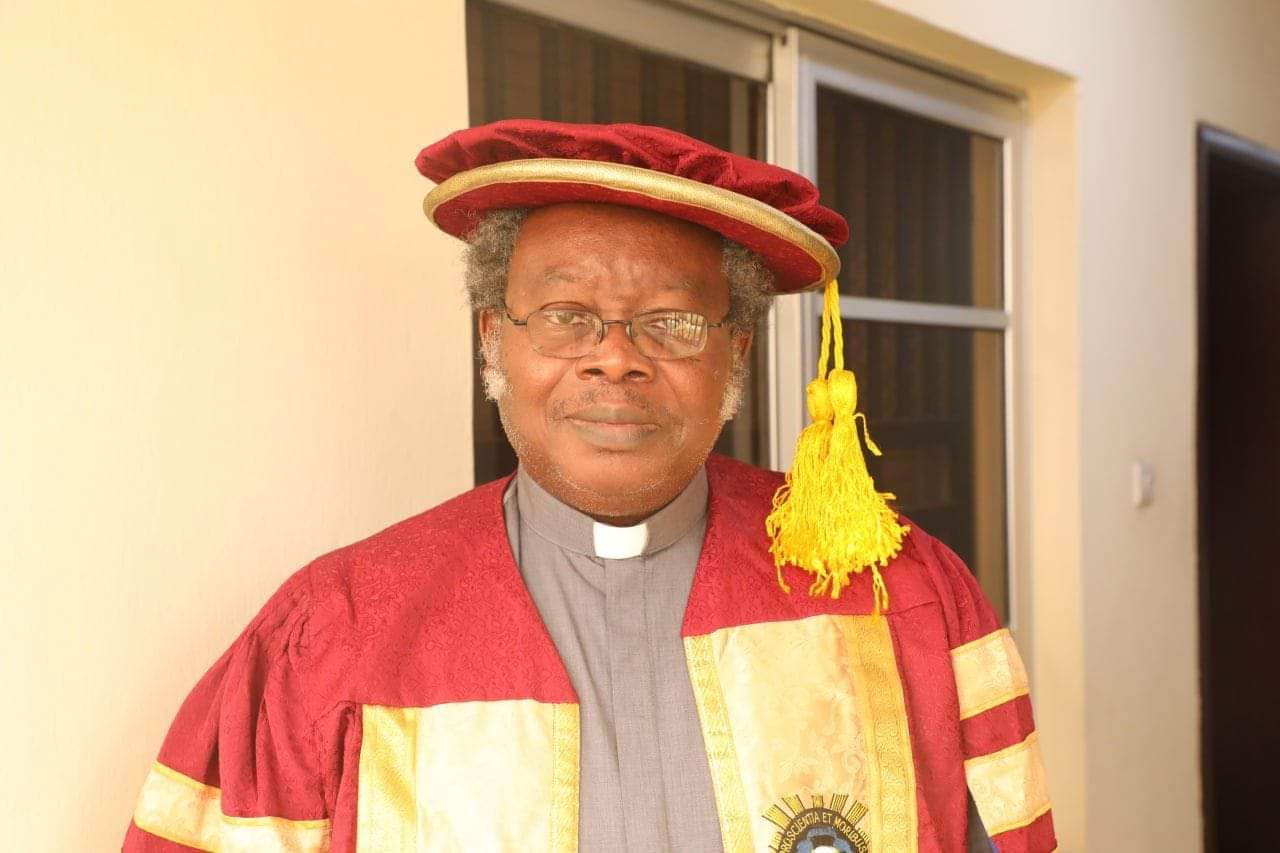
Fr. Anthony AKINWALE OP
It is difficult if not impossible to imagine what prophet Isaiah is saying to us in the First Reading this Sunday. Shall we live to see the day when the wolf will be a guest of the lamb, and the leopard shall lie down with the kid? Shall we live to see the day when the calf and the young lion shall browse together, with a little child to guide them?
“The cow and the bear shall be neighbours, together their young shall rest; the lion shall eat hay like the ox. The baby shall play by the cobra’s den, and the child lay his hand on the adder’s lair.”
Such is Isaiah’s beautiful vision of cosmic harmony. But the question is: when will this cosmic harmony be? And the answer? when the cause of the present cosmic disharmony is itself removed or neutralized.
Students of politics will perhaps tell us that one lesson to be learnt from the study of several centuries of the history of the world is that it is extremely rare for the wise to become kings, just as it is extremely rare for kings to become wise. Yet here we are, in Advent, listening to Isaiah. And Isaiah is speaking about a king on whom the spirit of the Lord rests; a spirit of wisdom and insight; a spirit of counsel and power, a spirit of knowledge and of the fear of the Lord; a king who will judge the wretched and the poor of the land with integrity and equity.
Isaiah’s announcement of cosmic harmony is not a prophecy because it is a prediction of what will happen, rather, it is a prophecy because it is a commentary, an ironic commentary on cosmic disharmony, a universal disharmony that was not meant to be.
We can speak of a disharmony that was not meant to be because, as the book of Genesis told us, when God created the universe, he saw that everything was beautiful. The beauty of the universe was its harmony, until sin brought disharmony; disharmony between God and human beings, disharmony among human beings, disharmony within the human being itself, and disharmony between the human being and the universe.
One might say that in the beginning was a jigsaw puzzle, and the jigsaw puzzle was the universe. The pieces were so irregular that none except God could put them together. God fitted the irregular pieces together. And thus came a beautiful universe. It was safe for human habitation, until injustice and rebellion defaced its beauty and destroyed its harmony. God and human beings were no longer friends. Every human being felt within himself/herself the anguish of existential self‑alienation. The symptom of this self‑alienation is not too difficult to notice.
We always desire what is good for ourselves, and this desire is not by itself illegitimate or sinful. But we often chose what can ultimately harm us. This self‑alienation is well described by the words of Gaudium et Spes, the Pastoral Constitution on the Church in the Modern World of the Second Vatican Council.
In the words of Gaudium et Spes: “The dichotomy affecting the modern world is, in fact, a symptom of the deeper dichotomy that is in man. He is the meeting point of many conflicting forces. In his condition as a created being he is subject to a thousand shortcomings, but feels untrammeled in his inclinations and destined for a higher form of life. Torn by a welter of anxieties he is compelled to choose between them and repudiate some among them. Worse still, feeble and sinful as he is, he often does the very thing he hates and does not do what he wants. And so he feels himself divided, and the result is a host of discords in social life” (10).
What the Second Vatican Council is telling us in those words is that, apart from the disharmony between God and human beings, and the disharmony within the human being itself, there is disharmony among human beings: parents against children, the poor against the rich, whites against blacks, men against women, adherents of one religion against adherents of another religion. There is disharmony even within the same religion, within nations, within the same ethnic community, within families.
But in the midst of all this, God offers us hope through Isaiah’s prophecy. The words of Isaiah foretell the coming manifestation of Jesus as the Christ through whom God will restore the beauty and harmony of our world. In order that this may come true, the call that John the Baptist makes in the liturgy of Advent needs to be heeded. It is a call to turn back to God, a call to return to the harmony that was meant to be when God created a beautiful world.
Disharmony with God sets in motion a chain reaction of cosmic proportions. Social and cosmic discords are nothing but effects of our discord with God. In order not to embark on a futile exercise of fighting the effects and leaving the cause, John the Baptist exhorts us to return to God, or, if we have already returned to God, to daily renew our commitment to our relationship with God, to prepare to receive the Christ. To be a Christian is to refuse to be pessimistic. It is to hope for and to accept the gift of a beautiful world from God. Isaiah’s prophecy may sound unrealistic. But the good news it contains is that it is still possible to have a beautiful world.
Let’s look at today’s First Rading again. Let’s look at the names of the beasts in the reading: the wolf and the lamb, the leopard and the kid, the calf and the young lion, the cow and the bear, the lion and the ox. These are animals that are unfriendly with each other. Isaiah announces to us the vision of a world whose beauty is restored and whose harmony is reestablished. One way of understanding Isaiah’s prophecy is by substituting the names of persons, or nations, or religions for the names of the beasts in that passage. Human beings are more important than animals. Now let us hold each other’s hands as a sign that we are united in hope and in prayer for the realization of the harmony Isaiah announces to us. And instead of the beasts let each of us think of names of two people we know, two people who are estranged from each other, spouses who cannot get along with each other, children of the same womb who do not smile at each other, two nations that are at war with each other. Let us ask God in silence to bring about the peace and harmony that comes from justice to these peoples, to these families, to these nations. Let us pray and work for the fulfillment of Isaiah’s vision.


Leave a Comment